SARS-CoV-2: Unveiling the COVID Leviathan (2021)
by Peter Jorgensen (pen name Sofie Ostvedt)
First published in September 2021, this is a free online version of the book, 'SARS-CoV-2: Unveiling the COVID-19 Leviathan', written by Peter Jorgensen, and published under the pen name of Sofie Ostvedt. ISBN: 9798467050706. The book contains no images, these have been added to help illustrate the online version.
Contents
Preface // Chapter 1 // Chapter 2 // Chapter 3 // Chapter 4 // Chapter 5 // Chapter 6 // Chapter 7 // Chapter 8 // References
Hastiness and superficiality are the psychic diseases of the 20th century, and more than anywhere else this disease is reflected in the press.
- Alexander Solzhenitsyn - Commencement Address, Harvard University, 1978 -
Chapter 2: The Origin of SARS-CoV-2
Where the virus came from is crucial to understanding how to manage such threats in the future. If it emerged as a result of experimentation, we may wish to consider how wise it is for such research to continue given that the full consequences of SARS-CoV-2 and the way it has been managed may, in the long-term, be more damaging than a world war. It may even lead to one. If science has lost its wisdom, its ethics, and its foresight, maybe it needs to be subdued and reigned in? Studying the discussion about the origin of the virus is fascinating. The zeal with which the initially preferred story was presented, that the virus had a zoonotic (animal) origin and it spread via a wet market in Wuhan, is intriguing by the way media channels and governments assumed this narrative and ensured it eclipsed all others. However, it was not long after the outbreak of the virus before information began to emerge that suggested the wet market narrative was problematic.
Firstly, Wuhan, the alleged source of the outbreak, was home to the Wuhan Institute of Virology - a research laboratory that had been studying how to manipulate viruses, including splicing viruses together to create more dangerous chimeras; work known as 'gain of function'. Gain of function research aims to find ways in which a virus can become more transmissible, more evasive to immune function, and ultimately, more likely to cause a deadly epidemic or pandemic. Furthermore, the Wuhan laboratory was known to have collaborated in gain of function research on corona viruses; the results of some of their work had been published [4]. In 2017, an article in Nature explained that the Wuhan lab was due an imminent upgrade to biosecurity level 4 [5]. This was a matter of international pride for the Chinese and researchers suggested they were hoping to work with Ebola and the virus that caused SARS (even though work on corona viruses had actually already been carried out under biosecurity level 3). However, the article also stated that critics were extremely concerned over safety, especially considering that SARS had escaped from another Chinese research lab in Beijing on more than one occasion. These concerns were not unfounded. According to one journalist, inspections by American officials had flagged up the Wuhan Institute as operating with an unsafe approach to biosecurity in 2018, just one year after it had commenced operations at biosecurity level 4 [6].
Even based on these facts, anybody with an iota of integrity would surely suspect that the wet market story smelled a little fishy. Which begs the question as to how even the mere suggestion of a link between the virology lab and the SARS-CoV-2 virus was attacked so vehemently and consistently by popular media sources and scientists who appeared to have appointed themselves as authoritarian guardians and keepers of truth. These were the first obvious signs of how key figures in the scientific establishment would work with popular media to shape and control public perceptions over the coming months and years. 'The Science' began to emerge as a neo-Orwellian concept on a par with 'The Party' from the novel '1984' by Eric Arthur Blair, published under his pen name - George Orwell. What made the articles about the origin of the virus so conspicuous was both their certitude at such an early stage and the narrative use of dog-whistle terms like 'disinformation', 'misinformation', 'conspiracy theory', 'tin-foil hats' and 'debunked'. All terms emanating from the lexicon of western media propaganda; weaponised words used to shepherd and direct minds away from contemplating non-mainstream narratives using derision and shaming. This is not journalism but social engineering; it is bullying not reasoning. Perhaps, in this instance, there were other motives at work: an attempt to prevent an international dispute with China that could quickly escalate to global conflagration; a desire to minimise the risk of racist attacks against people of Asian or Chinese origin; or simply a knee-jerk defensive reaction by those in fear that their profession - the source of their income, prestige and influence - might come under political attack due to public pressure.
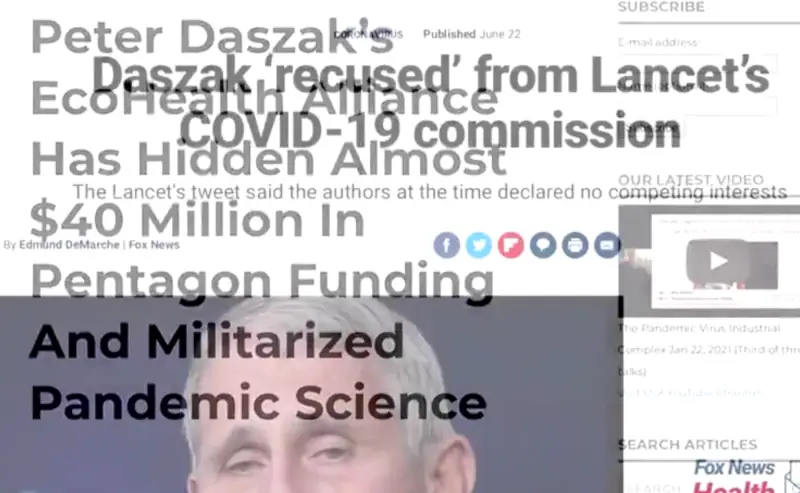
Prominent private and state media corporations maintained the policy to portray any consideration of the potential link between the appearance of a novel, highly infectious, deadly virus and a laboratory that had specifically been studying how to make this type of virus more deadly and that was located just a few miles away, as foolish [7, 8]. Some of this narrative was written by people such as Peter Daszak who, unknown to many of his readers, had considerable personal, professional, and financial conflicts of interest when it came to the issue of safety in viral research, including direct links to the work conducted at the Wuhan laboratory [9]. Daszak, who was particularly fond of deploying the phrase 'conspiracy theory', was recused from the Lancet's COVID-19 commission in June of 2021, owing to his failure to be open and honest about declaring his own significant conflicts of interest [10]. It is a shame the journal did not appear to perform due diligence when appointing Daszak in the first instance. The question is why?
The campaign of censorship and restriction of debate did not just affect discussion over the origins of the virus. By November of 2020, tyrannical control over information flows and attack-dog suppression of scientific debate led British Medical Journal executive editor, Kamran Abbassi, to state [11]:
Science is being suppressed for political and financial gain. Covid-19 has unleashed state corruption on a grand scale...
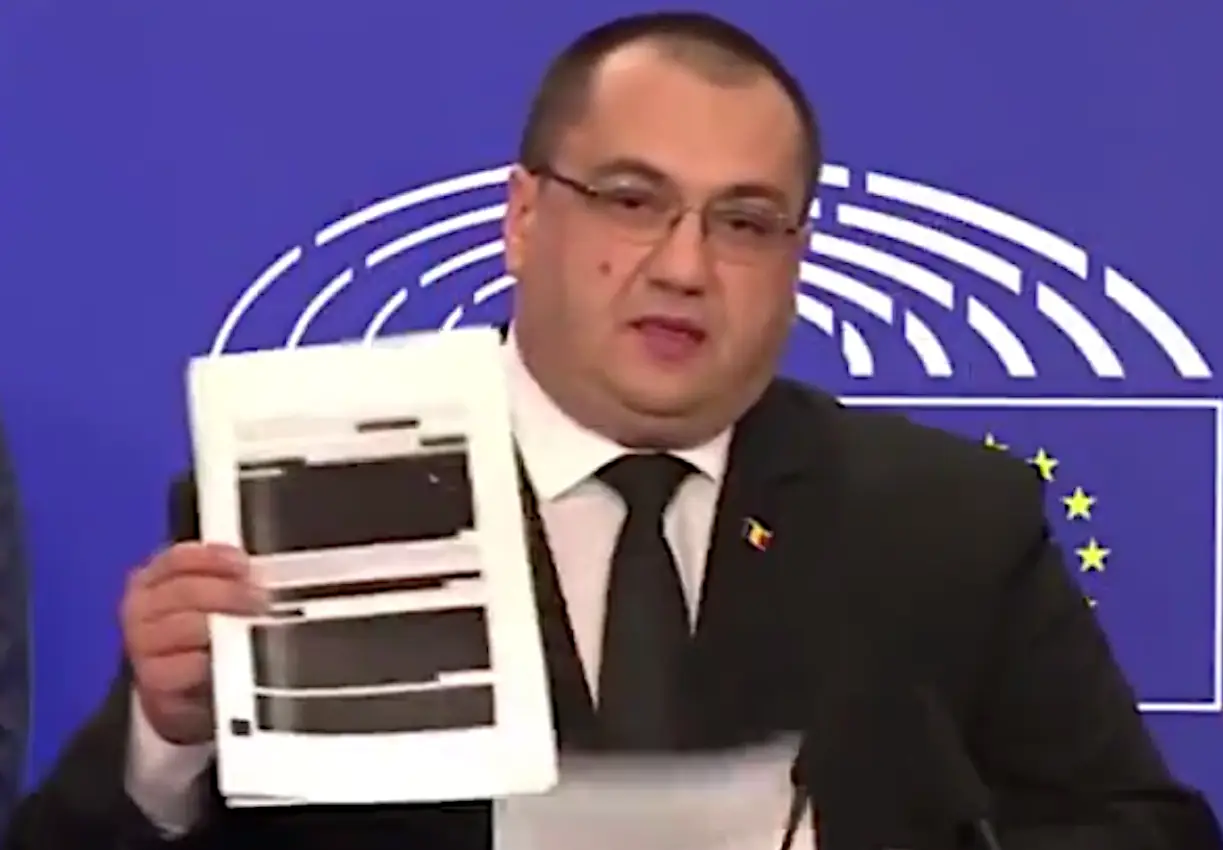
As time passed, suspicions of a laboratory origin proved not to be as outlandish or irrational as the initial propaganda campaign had made them out to be. In spring of 2021, Facebook revised its policy of censorship based on its 'Community Guidelines' allowing talk about the possibility of a laboratory origin; previous policy had been to banish all mention of this - a tacit admission of how irrational, unscientific, and authoritarian their censorship policy was in the first instance [12]. What had been obliterated under the label of irrational disinformation suddenly became possible and acceptable for debate. Had reality changed? No, but the corporation-sanctioned perception of reality had certainly altered for people who relied on the Facebook corporation to control the validity of the ideas they were exposed to. Far from a thirst for the truth, the most likely reason for this reversal of corporate policy was the increasing danger that substantial numbers of people would become aware of how throttled and controlled their information flows were when they came across compelling reasons for suspecting a laboratory origin of the virus. If they realised the extent to which dogmatic propaganda and censorship were being used to shape their understanding, they may then also come to question what other information has been kept from their purview, who is keeping it from them, and why.
Facebook's policy U-turn was justified based on 'new' information. Yet, most pertinent evidence about the potential of a lab origin for the virus was not new and exactly the sort of information they themselves had been blocking from their own platform. Very early after its emergence, properties of the virus were identified that placed significant question marks over the idea that the virus could have been the product of natural evolution. In January 2020, a group of scientists raised serious questions about structure of the virus. They highlighted the unusual characteristics of SARS-CoV-2, including similarities of the spike protein to HIV [13]. However, this paper - a preview which had not yet been peer-reviewed - was hastily withdrawn by the authors after pressure from some quarters of the scientific community.
Curiously, the link with HIV was raised again when an Australian COVID-19 vaccine manufacturer found that those inoculated began to test positive for HIV [14]. There was no suggestion the vaccine caused HIV but there did appear to be some genetic similarity between key components of SARS-CoV-2 and HIV. Either that or the HIV testing kit being used was seriously flawed. The firm manufacturing the vaccine in question decided troubleshooting the issue would be too time-consuming, and that they would be unable to find a solution within the short timeframe required to meet urgent demand for COVID-19 vaccines. Production was halted. The evidence for unusual links between COVID-19 and HIV are still largely unaddressed, but it seems that any direct links between HIV and SARS-CoV-2 had been dispelled. By contrast, the potential for a laboratory origin remained a hotly debated topic.
In March 2020, a letter of opinion appeared in Nature suggesting that a laboratory origin seemed unlikely but did accept that this conclusion should be revised upon consideration of further evidence [15]. Around the same time, Chinese officials were claiming that the USA had brought the infection into China following its escape from Fort Detrick - a US bioweapons research site that, coincidentally, had been shut down in August 2019 due to lapses in the maintenance of biosecurity [16]. The Chinese suggested that the virus had been circulating in the USA in 2019 but its presence had been ignored or covered up. By April of 2020, UK government ministers were also considering the possibility that SARS-CoV-2 had leaked from a laboratory [17]. Shortly afterwards, French scientist Luc Montagnier (a Nobel laureate) was said to have suggested that the structure of SARS-CoV-2, including some notable similarities to HIV, pointed to a lab origin; he also highlighted the nature of the work that the Wuhan research lab had previously undertaken with corona viruses in support of that possibility [18, 5]. By June of 2020, the former head of MI6 - Sir Richard Dearlove - was quoted as saying,
I do think that this started as an accident
... and was broaching the issue of reparations by the responsible party [19]. Dearlove's sentiments were mirrored by David Asher, a former lead investigator for the US State Department, who suggested SARS-CoV-2 could be:
a weapons vector gone awry.
Later in the year, Yan Li-Meng - a Chinese virologist who had prior experience working in the Wuhan laboratory, produced a well-referenced paper claiming not only that SARS-CoV-2 was a lab creation but also a bioweapon that had been deliberately released by the Chinese Communist Party [21]. She pulled no punches in drawing attention to widespread fraud within the scientific community. Ulterior political motives cannot be dismissed for any of the narratives presented but in Yan's case taking on the Chinese government is an incredibly dangerous thing to do (as it would be with most national governments just ask Julian Assange or Edward Snowdon). It is notable that Yan fled China to the USA shortly after her initial revelation with support from The Rule of Law Foundation. However, they later withdrew support for her following a deterioration in her mental state which led to a deep paranoia about potential threats of assassination from perceived friendly sources. Whether justified or not, such paranoia sounds understandable given the circumstances. Withdrawing support for someone in their direst time of need seems like an odd policy.
Critics have suggested that some of Yan’s claims are unsubstantiated. Remember, we are dealing with state secrets and matters of national security involving the most controlling government in the world who have deployed the most ubiquitous citizen surveillance program ever created. Focusing on the arguments presented, Yan's case is very compelling. Scientific analysis suggested that the virus had a structure with qualities that are highly unlikely to have occurred naturally. Notably, the virus appeared to have been designed to be especially transmissible between, and virulent to, humans. Additionally, links to the Wuhan wet market were said to be weak with no corroborating evidence that initial infections, nor patient zero, originated there.
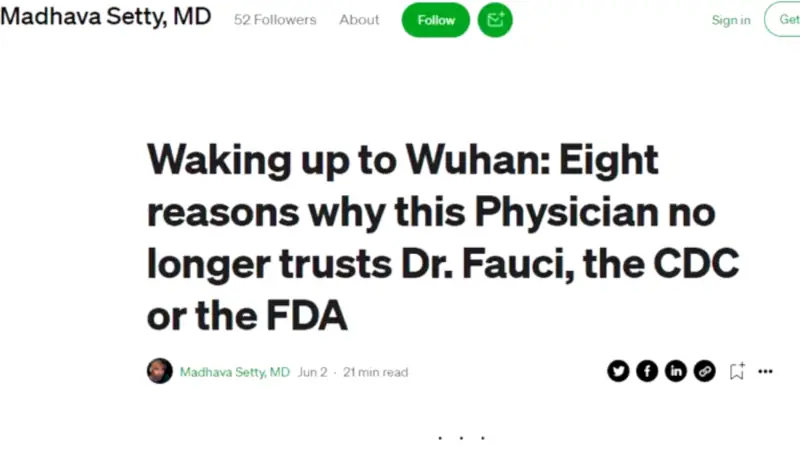
In December 2020, a further report said that Chinese officials could find no evidence of an animal origin for the virus [22]. During 2020, it appeared that political tension was increasing between the USA and China. Over the summer, two US aircraft carriers were deployed to the South China Sea [23]. However, there was also an important and interesting link between the US and the Wuhan laboratory. In 2015, Dr Anthony Fauci - director of the National Institute of Allergy and Infectious Diseases in the USA, had been appointed to oversee a five-year research project based in Wuhan that involved working on corona virus in bats. His involvement included management of grants worth $7.4 million, some of which vicariously funded research that took place in the Wuhan laboratory [24].
The intrigue concerning the origins of the virus is complex. It is further confounded by confusion as to exactly when, and where, the virus emerged. The dominant story initially propagated was that the virus emerged in Wuhan, China, toward the end of December in 2019, hence this is what shaped public understanding. However, other reports present facts that conflict with this account. Firstly, there was the claim that the first case occurred in Hubei province and could be traced back as far as 17th November 2019 [25]. The possibility that the virus could have been in the UK as early as late November 2019 was also considered scientifically credible [26]. Traces of SARS-CoV-2 specific antibodies were found in blood donated in the USA as early as 13th December 2019 and confirmation of the presence of SARS-CoV-2 specific antibodies in samples that were taken in early January 2020 mean that the virus must have been present in the USA at least as early as mid-December 2019 (this is because the antibodies are said to take 14 days from infection before they are reliably detectable) [27, 28].
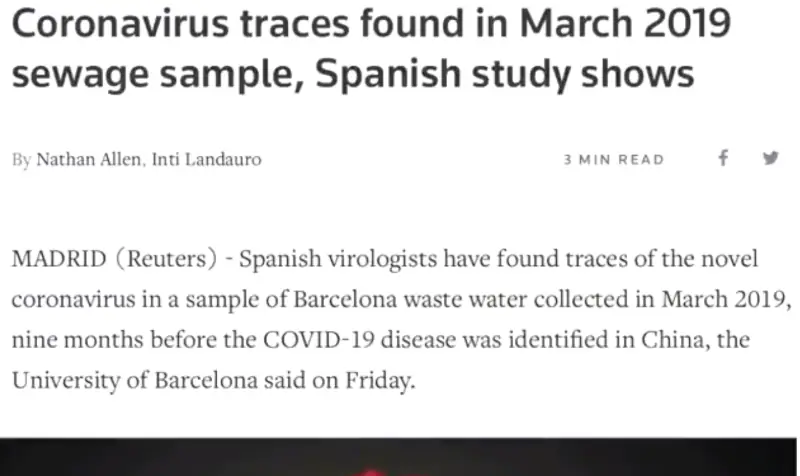
Elsewhere, Italian scientists claimed they found a match for the virus in a sample taken on the 5th of December 2019 from a young boy suffering with measles [29]. Another group of researchers found a small number of blood samples taken in Italy in October 2019 tested positive for SARS-CoV-2 antibodies [30]. They verified this using two different methods and suggested it was plausible that the disease was circulating at that point; the other possibility being that antibody tests are not reliable [31]. In Brazil, sewage samples taken in November 2019 were reported to have tested positive for SARS-CoV-2 [32]. Spanish scientists even claimed to have found confirmation of the presence of SARS-CoV-2 in frozen sewage samples taken in Barcelona in March of 2019 [33]. These events suggest that either there are grounds for scepticism over the original official tale of how the virus emerged from animals or that there are reasons to doubt the accuracy and efficacy of the methods being used to detect and identify the virus; perhaps both.
The WHO attempted to instigate an investigation by sending a team of experts to Wuhan but for an entire year they did not set foot in China [34]. On the 14 January 2021, they were allowed to begin the performance of their inspection. Less than a week later, and with access to crucial data denied, they declared they were unable to find any evidence for a laboratory escape [35, 36]. Despite this, they offered little information about the true origins of the virus. In June 2021, former MI6 chief Richard Dearlove, pointed out the painfully obvious - that China would have long eradicated any evidence of a laboratory origin [37]. Imagine a police investigation of a murder scene limited to take place over a few days, delayed for a year, while the suspect, still an occupant at the crime scene, had full knowledge of their suspicions, intended arrival, and retained the ability to completely block access to documents or other information during any investigation that did take place. How likely is it that such an investigation would reveal meaningful evidence? Following the token performance of the WHO inspection, the BBC reported that [36]:
Experts believe the virus is likely to have originated in animals, before spreading to humans, but they are not sure how.
In view of the lack of evidence to support this theory, and plenty to the contrary, it seems that 'believe' was the operative word. If they were 'not sure how', where is the evidence for holding such a belief? Jamie Metzl, a member of the WHO advisory committee, was later reported to have confessed that overwhelming circumstantial evidence made the idea that SARS-CoV-2 may have originated in the Wuhan laboratory far more plausible than it being a wholly zoonotic virus spread from bats [38]. Even Dr Rochelle Walinsky, a director at the US Centers for Disease Control, conceded that a lab origin was a possibility [39]. A Bayesian analysis conducted by Dr Steven Quay concluded that the probability of the virus being man-made was 99.8% versus a 0.2% chance of a zoonotic origin [40]. One of the founders of Moderna, microbiologist Derrick Rossi, also believed that the virus accidentally escaped from the Wuhan laboratory [41]. Evidence that live bats had been kept at the Wuhan lab proved that members of the commentariat, such as Peter Daszak, had not only been dishonest about their interests but also in their representations; it also meant that technical biological arguments for a zoonotic origin do not prove that that the virus could not have leaked from an animal in the laboratory [42].
Plenty of scientists outside China knew about the use of live bats - it was hardly a Chinese state secret - Australian universities had even collaborated on some of the research projects [43]. In 2021, further evidence emerged showing that there were no bats (or pangolins) traded at the Wuhan wet market between May 2017 and November 2019 [44]. Despite mounting evidence, many continued to cling to the original story - that the disease emerged following zoonotic transmission via animals sold in the market. Some people will stick to their beliefs regardless of conflicting evidence. It is a hard-wired evolutionary adaptation to ensure that one's reasoning is socially compliant [45]. In other words, to benefit one's survival it is more efficient to change one's reasoning to fit perceptions of what is acceptable than to face becoming an outcast from the group. At least it is in the short term. Those who have the most comfortable existence and/or who benefit most from existing narratives are the least likely to buck this trend. For most, short-term self-interest will trump acceptance of a difficult truth every time.
Pete Jorgensen is a singer songwriter, guitar player, bass player, sound engineer, philosopher, author, artist, and horticultural scientist who has lived in Liverpool, Lancaster, Lancashire, Cornwall, Camden, and Surrey, England, UK.