SARS-CoV-2: Unveiling the COVID Leviathan (2021)
by Peter Jorgensen (pen name Sofie Ostvedt)
First published in September 2021, this is a free online version of the book, 'SARS-CoV-2: Unveiling the COVID-19 Leviathan', written by Peter Jorgensen, and published under the pen name of Sofie Ostvedt. ISBN: 9798467050706. The book contains no images, these have been added to help illustrate the online version.
Contents
Preface // Chapter 1 // Chapter 2 // Chapter 3 // Chapter 4 // Chapter 5 // Chapter 6 // Chapter 7 // Chapter 8 // References
The opposite of courage in our society is not cowardice, it is conformity.
Rollo May - Man's Search for Himself
7. Facemasks
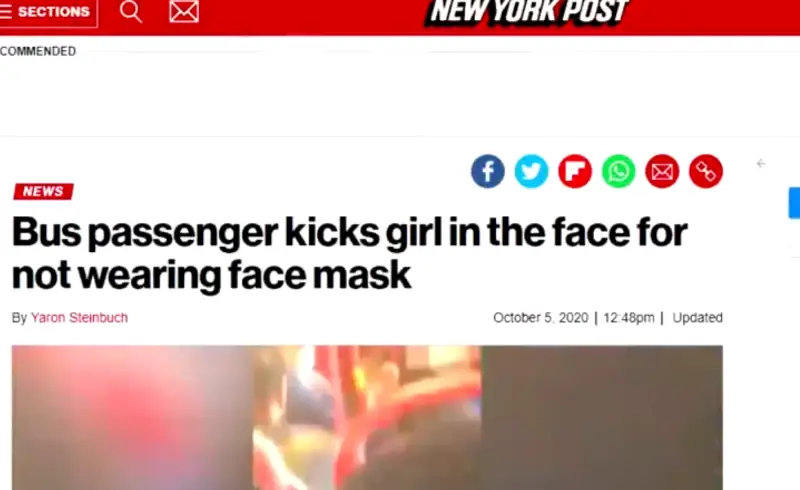
Given that the wearing of a face mask became mandated for at least some settings in most countries, it could be expected that this policy would have been formed on the basis of solid scientific evidence. When people who refused to wear masks were subject to public derision, violence, police brutality, arrest and punishment, any reasonable person would assume that it must have been necessary for policy makers to show robust evidence that the wearing of masks actually worked in disease control and had no undesirable physical or psychological effects. However, there was no good evidence that the wearing of facemasks would be beneficial and plenty of evidence that they could cause harm. Not just short-term minor harm but potentially chronic and fatal disease.
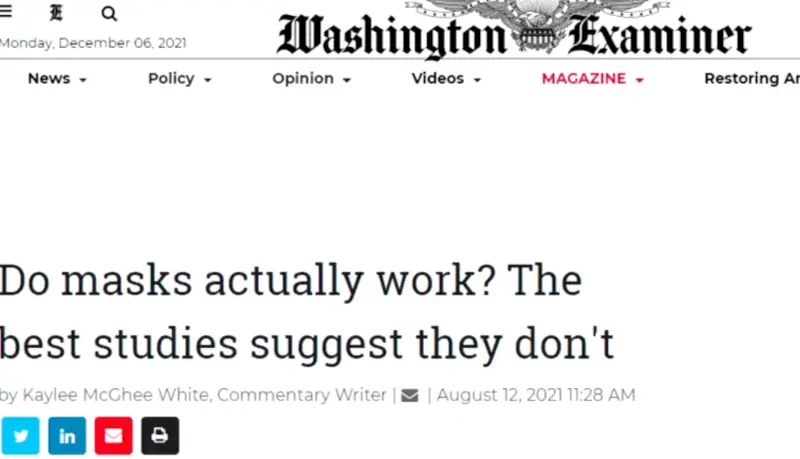
a. Benefits
Prior to the COVID-19 outbreak, it was well known that facemasks were of little use for controlling or containing respiratory viruses. Early in 2020, Dr Fauci, a man who had worked on disease control for over forty years, including work with severe respiratory viruses, stated his position clearly [427]:
Right now in the United States, people should not be walking around with masks…there’s no reason to be walking around with a mask.
Indeed, examining the evidence suggests that his initial position, rather than his later U-turn, was the most scientifically credible one. A meta-analysis of ten randomised controlled trials that looked at the efficacy of non-pharmaceutical measures in controlling the spread of influenza found that the wearing of masks does not reduce viral transmission - the study was published on the CDC website in May 2020 [428]. In fact, it has long been known that facemasks have dubious efficacy even in a hospital setting. One study published in 1981, found that not wearing masks for six months during surgery showed no increase incidence of wound infection compared with wearing masks [429]. Cloth masks including homemade and improvised masks were often recommended by authorities and popular media. Indeed, a whole industry arose selling this type of mask. Yet evidence pre-dating COVID-19 found that cloth masks are almost entirely useless at stopping any particles from passing through, but are warm and can retain moisture acting as a reservoir and breeding ground for pathogens [432].

The use of facemasks by dentists to prevent the spread of airborne pathogens, was subject of a thorough review published in October 2016 [430]. It concluded that there was no evidence that the masks worked to prevent transmission. Among the many studies and reasons provided was the fact that masks were incapable of filtering 85% of particles sized between 0.3 and 2 microns - viral particles are far smaller, generally 0.04 - 0.1 microns - all of them can pass through either disposable medical-style facemasks or cloth masks. The tiny number that are blocked in the first instance will simply be dislodged and blown out via the sides or through the material on a subsequent inhalation and exhalation cycle. The author of the study called the policy of wearing facemasks as PPE nothing more than a fable.

A large randomised controlled study carried out in Denmark found no statistically significant difference between mask wearers and non-mask wearers in risk of testing positive for SARS-CoV-2 [431]. The authors of the paper appeared to go to great lengths to suggest that their study should not be used to question the efficacy of mask wearing despite their evidence being quite clear that masks were ineffective; bizarrely they attempted to suggest that their evidence could be used to argue that facemasks might be effective despite the range of uncertainty in their statistical analysis also showing that they could potentially increase infection. In terms of the statistical power of the samples used in the analysis, the study is probably best ignored. However, one of the reasons that the study was scientifically inconclusive was because so few people actually contracted the virus in either the mask wearing group or the non-mask wearing group out of the thousands recruited to take part - that is the most interesting fact revealed. This low infection rate occurred despite the participants being active in Denmark, a country where few people among the general population were wearing masks at the time the study was conducted. In the USA, a cross-state study in the USA found that mask wearing was not associated with increased containment of COVID-19 [438].
Perhaps the most damning assessment of the lack of efficacy of facemasks, came from Denis G. Rancourt PhD in April 2020 [433]. Rancourt had searched for randomised controlled trials that provided evidence that masks could be efficacious in the control of respiratory viruses. He found none, but did find numerous studies that show that masks are useless in the control of respiratory viruses [434, 435, 436, 437]. Having considered over 20 scientific papers relating to the issue he illustrated how studies that show control of droplets or larger particles are irrelevant when faced with the fact that aerosolised virions will always escape masks and be capable of causing infection. In other words, if someone is infectious, wearing a mask will not stop the virus escaping into the air. His conclusion was:
No RCT study with verified outcome shows a benefit for HCW [health care workers] or community members in households to wearing a mask or respirator. There is no such study. There are no exceptions. Likewise, no study exists that shows a benefit from a broad policy to wear masks in public.
He went on to say:
The present paper about masks illustrates the degree to which governments, the mainstream media, and institutional propagandists can decide to operate in a science vacuum, or select only incomplete science that serves their interests.
b. Harms
It would seem fairly obvious that putting something over your mouth and nose would affect your ability to breath. However, for those in doubt, there is science to support this. One study found that just six minutes of walking with a surgical mask on increases dyspnoea (shortness of breath) when compared with not wearing a mask [439]. Another research paper suggests that wearing a mask can lead to lowered levels of oxygen and increased levels of carbon dioxide (hypercapnic hypoxia) which [440]:
...may potentially increase acidic environment, cardiac overload, anaerobic metabolism and renal overload, which may substantially aggravate the underlying pathology of established chronic diseases.
For people wearing masks while exercising, significant reductions in blood oxygen, exercise performance, and an increase in shortness of breath were found [441]. The reduction of available oxygen was not found to have decreased to levels of clinical concern but it was physiologically measurable. A major shortcoming of the study, as with many others, is that it only looks at short-term use. Most studies use time periods of minutes. No studies appear to have been conducted examining the physiological effects of wearing facemask barriers for extended periods of time - such as the twelve hour plus shifts, day after day, as per health care workers who might be required to wear them.
Potential risk in pregnancy was raised as a potential safety concern by a study that showed prolonged use of an N95 mask under light physical activities could result in reduced oxygen intake and increased carbon dioxide retention [442]. The issue of oxygen deprivation was raised by another cohort of researchers who highlighted that mask wearing was associated with MIES - Mask Induced Exhaustion Syndrome [443]. The cohort provided 44 research papers showing a variety of issues arising due to the wearing of fabric, surgical, and N95 masks including: increased breathing resistance, increased respiratory rate, increased blood pressure, increased heart rate, respiratory impairment, fatigue, drowsiness, dizziness, headache, skin irritation, rhinitis, bacterial contamination, viral contamination, and fungal contamination. The study also listed research findings on detrimental psychological effects of mask wearing including a false sense of security and lowering of empathy. Psycho-vegetative effect was also evidenced - this is a condition that affects the mind and body usually connected with a psycho-somatic effect that influences endocrine and nervous system functioning creating real problems with the functioning of organs and unpleasant and distressing experiential symptoms.
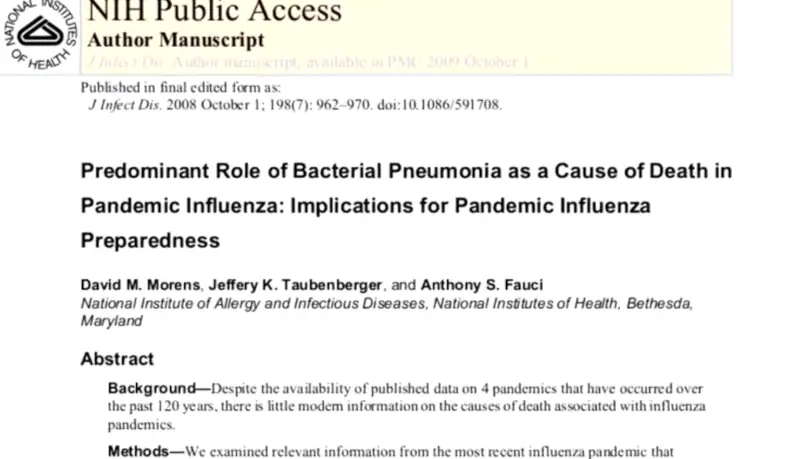
Bacterial contamination is a serious issue as this can potentially lead to disease and death from sepsis and pneumonia. It is interesting to note that a study published in 2008 and co-authored by Dr Fauci of the CDC, concluded that the majority of deaths attributed to the Spanish flu pandemic of 1918 were most likely caused by secondary bacterial pneumonia [444]. Wearing improvised cloth facemasks was common during this period.
The risk of fungal contamination was linked to the outbreak of black fungus in India which was reported to have caused a large number of deaths during the pandemic. It was speculated that prolonged mask wearing accompanied by conditions of poor hygiene including low capacity for thorough and frequent washing of masks were contributory factors [445]. Addressing the issue of viral contamination, another group of researchers, whose work was published in 2019, examined masks worn by healthcare workers and found that prolonged mask-use could lead to general viral contamination of the outer surfaces increasing susceptibility for self-contamination and for carrying and retransmitting the viral load to others [446].
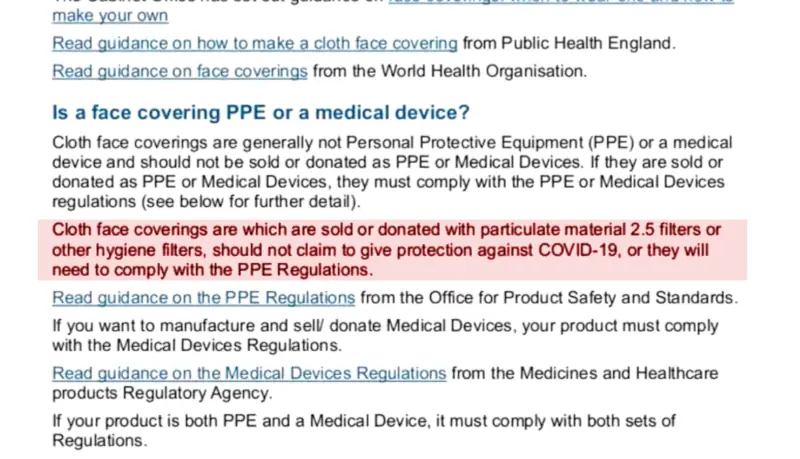
Disposable medical-style facemasks have been found to contain contaminant particulates including lead, cadmium, and antimony all of which can be directly harmful to human health including as respiratory irritants and carcinogens (i.e., antimony trioxide); they are also environmental pollutants [447]. Importantly, the type commonly acquired by the public, used by many businesses, and in care settings, are not manufactured to the standard of properly approved medical masks. As such, neither they, nor cloth masks, are permitted to be legally classified as personal protective equipment (PPE) or as a medical device [448, 449]. Concerned experts have found that there may be risk from the shedding and inhalation of micro-plastic particulates from masks [450]. Inhalation of microplastics could hold potential for causing chronic long-term respiratory problems as well as irritating and inflaming the respiratory tract which could make a person more prone to viral infection and complications associated with the immune response to such an infection. Such risks are contrary to legal requirements for the manufacture of safe products which stipulate that face coverings must [451]:
...be made from a fabric that does not shed fibres that may be inhaled during use.
These legal requirements also state:
Face covering not to be made from a material not designed to be worn against the skin or dyed with chemicals containing poisons that could be ingested.
c. Plastic Visors
Plastic visors are effectively useless as confirmed by SAGE in the UK [448]:
There is no published evidence that they are effective as a source control...
Guidance published by the UK government on the wearing of facemasks stated that [451]:
...face visors or shields do not adequately cover the nose and mouth, and do not filter airborne particles.
And,
...the government does not recommend their use by the wider public...

d. Summary
In March of 2020, the UK's chief medical officer, Chris Whitty, stated that the public should not wear facemasks because they were of no use in controlling the spread of corona virus [452]. Despite poor evidence of efficacy, and plenty proving the potential harms caused by facemask wearing, many nations, including the UK, forced their citizens to wear them on fear of denial of entry to essential services such as supermarkets and hospitals. Despite clear exemptions being made, people without masks were frequently abused or assaulted by zealous members of the public, security guards, or police.

One case in Australia saw a man with heart disease suffer a heart attack following his arrest for not wearing a mask; militant police had refused to believe him when he told them he was not wearing a mask due to having a heart condition [453]. In spring of 2021, a case brought on behalf of a German school pupil resulted in the judge declaring that policies forcing children to wear facemasks were unconstitutional and causing physical, psychological, and pedagogical harm [454]. In July of 2021, the Telegraph reported the concerns of Dr Colin Axon, an advisor to the UK government. He compared facemasks to comfort blankets, noting that they do little to stop the spread of the virus which is approximately 500 000 times smaller than the pore size of most cloth masks [455]. Yet facemasks have become far more than comfort blankets. They are now closer to a pseudo-religious adornment and a symbol of the faithful to an irrational and godless religion.

Pete Jorgensen is a singer songwriter, guitar player, bass player, sound engineer, philosopher, author, artist, and horticultural scientist who has lived in Liverpool, Lancaster, Lancashire, Cornwall, Camden, and Surrey, England, UK.