SARS-CoV-2: Unveiling the COVID Leviathan (2021)
by Peter Jorgensen (pen name Sofie Ostvedt)
First published in September 2021, this is a free online version of the book, 'SARS-CoV-2: Unveiling the COVID-19 Leviathan', written by Peter Jorgensen, and published under the pen name of Sofie Ostvedt. ISBN: 9798467050706. The book contains no images, these have been added to help illustrate the online version.
Contents
Preface // Chapter 1 // Chapter 2 // Chapter 3 // Chapter 4 // Chapter 5 // Chapter 6 // Chapter 7 // Chapter 8 // References
The world has been taken over by corporations...the governments, the philanthropists...the medical profession, the media - are all on one side, and nobody dares speak up. Who will speak up? It is your right to take or not take [a] vaccine. If anybody tries to say you have to take [a] vaccine tell them, 'Put it in writing that nothing will happen to me.' nobody will.
Dr Shiv Chopra - Former senior scientific advisor to the Canadian government - speaking at Total Health conference in 2013.
6. Treatment
For those few who were more at risk from COVID-19, many treatment options were available; some of these were known to be effective very early after the emergence of the SARS-CoV-2 virus. As such, the use of an experimental vaccine that has had no long-term safety studies for disease control is a risky business and really should have been considered as a last option, not the first, in combatting a newly emerging disease. Where effective treatments and prophylactics are available, experimenting with novel vaccine technology on unwitting and poorly informed human populations should not be deemed necessary and never mandatory. A prophylactic is something that is used before contracting an infection or disease whereas a treatment is something used afterwards. Treatments and prophylactics share similar goals: to reduce severity, encourage recovery, and enable the development of natural immunity. Unlike a treatment, a fully effective prophylactic can also serve to prevent infection or disease arising following exposure to a pathogen. The following treatments are cheap and freely available, they have had decades of long-term usage so that short-term, medium-term, and long-term risks are well known. However, their widespread use and deployment was unlikely to have had the sort of dramatic effects on stocks and shares as the novel COVID-19 vaccines did.
a. Chloroquine and Hydroxychloroquine
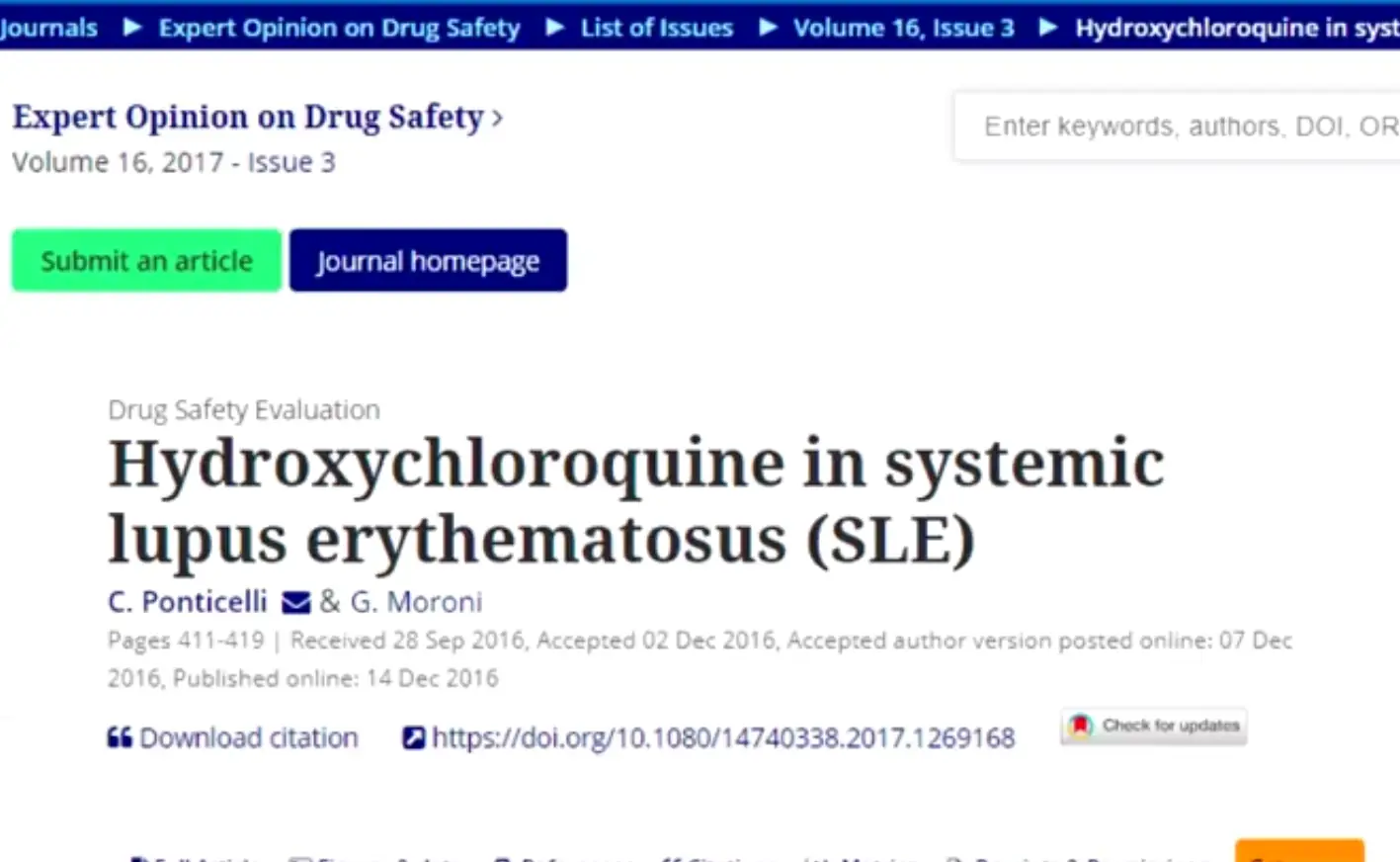
Chloroquine was first identified as an effective prophylactic and treatment for corona virus in 2005 following trials conducted on mice that had been deliberately infected with the SARS-CoV virus [400]. Hydroxychloroquine is very similar to chloroquine but considered less toxic. Both drugs have been used for decades to prevent malaria and treat chronic inflammation arising from auto-immune diseases such as lupus and rheumatoid arthritis. In many countries they are considered so safe that they are freely available to buy over the counter and without prescription.
A large cohort of qualified and practising doctors in America were so confident of its efficacy, and yet so concerned about authorities trying to prevent its use, that they formed a group called America's Frontline Doctors in order to inform the public of their opinion. During the summer of 2020 they produced a video in which they explained their position and their clinical experience of using the drug successfully in the treatment of patients diagnosed with SARS-CoV-2. However, the video was censored from popular social media platforms and ignored by many media outlets. One of the reasons for this was due to a hastily published paper that appeared in the Lancet, a respected, peer-reviewed, scientific journal. The paper suggested hydroxychloroquine was ineffective and dangerous. This led the WHO to put a moratorium on the drug. However, after independent scrutiny and requests for the original data, which the authors refused to provide, the paper was later retracted [401]. It appeared that the data used in the study had been completely fabricated. Yes, a paper based on invented data, and designed to push a political narrative, was published in a major international journal following peer-review. This did not prevent individuals from America's Frontline Doctors from being persecuted. One committed and hard-working doctor was sacked from two hospitals [402]. Others were threatened, as were the staff they had worked with.
One of the key contentions in the hydroxychloroquine debate was over the fact that those who claimed to have used it effectively suggested it needed to be used sparingly early after infection and symptom onset, whereas the data relied upon for evidence against it was focused on post-hospitalised patients receiving absurdly large, and toxic, doses. There is often an absence of the sort of data academics rely upon for analysis when a treatment is first used in a novel way or on a novel disease. This would not ordinarily prevent its use and important factors such as direct clinical experience and expertise, alongside patient choice would come to the fore. New York Doctor, Vladimir Zelenko, claimed to have treated over 1000 patients using a low dose of hydroxychloroquine alongside zinc and an antibiotic, with only three high-risk individuals having succumbed to death by COVID-19, the rest recovering [403].
A thorough review and explanation of the mechanisms of Hydroxychloroquine suggest that there is good evidence to show that it can be an effective treatment when used as part of a combinational therapy regime, but there is also evidence that questions its efficacy and there are dangers in its use at higher doses [404]. When contemplated as a single body of data, without paying attention to the nuance in the way the drug is deployed, the evidence appears conflicting and uncertain. In the USA, the FDA stopped the use of Chloroquine and Hydroxychloroquine in summer of 2020 for treating COVID-19 (it is still available for other conditions). China chose to continue to permit the use of Chloroquine but not Hydroxychloroquine. A balanced analysis suggested that there was evidence of a significant effect in combatting the virus in some patients, especially when deployed early and with low doses [405]. It appeared that other methods and factors involved in its use were significant.
A large cohort of practising American doctors, confident in its effectiveness and concerned about efforts to prevent its use, formed a group called America’s Frontline Doctors to share their clinical experience. In summer 2020 they released a video explaining their findings, but it was censored from major platforms and ignored by much of the media. This censorship followed the publication of a paper in The Lancet claiming hydroxychloroquine was ineffective and dangerous. The WHO suspended trials based on this study. However, when independent scientists requested the original dataset — which the authors refused to provide — the paper was retracted for fabrication [401]. A peer‑reviewed article based on invented data, pushing a political narrative, had been published in one of the world’s top medical journals. Nevertheless, members of America’s Frontline Doctors were persecuted; one dedicated doctor was fired from two hospitals [402], and others were threatened, along with colleagues.
One major point of contention was timing and dosage. Doctors who claimed success argued hydroxychloroquine must be used early and at low doses, while studies claiming ineffectiveness administered extremely high, toxic doses to hospitalized patients. Early in a new disease, academic‑style data is often scarce. Traditionally, this does not prevent treatment; clinical judgement and patient choice play a major role. New York doctor Vladimir Zelenko reported treating over 1,000 patients with low‑dose hydroxychloroquine plus zinc and an antibiotic, losing only three high‑risk patients while the rest recovered [403].
A detailed review of hydroxychloroquine’s mechanisms suggests substantial evidence for effectiveness when used as part of a combination therapy, while acknowledging evidence against its efficacy and risks at high doses [404]. When all data is viewed without regard to nuance in dosing or timing, results appear conflicting. In mid‑2020, the U.S. FDA halted its use for COVID‑19 (though it remains approved for other illnesses). China continued to permit chloroquine but not hydroxychloroquine. A balanced analysis indicates significant benefit for some patients when used early and at low doses [405], with effectiveness depending heavily on method of administration and clinical context.
b. Vitamin D
The UK public body, the National Institute of Health and Care Excellence (NICE), suggest that, in the winter months between December and March, 39% of adults aged 19-64, and 32% of the under 19s, have low vitamin D [406]. In the summer (July to September) it is 8% and 4% respectively – far fewer but still a significant number of people. NICE also state that people from minority ethnic groups, and those who live in institutions such as prisons and residential homes, may be more likely to have low vitamin D levels. The main reason for this is lack of sunlight. In the UK, sunlight is insufficient for skin to create vitamin D during the winter months and this loss cannot be accounted for through diet. People with darker skin are less able to make vitamin D naturally given equal exposure to sunlight and are more prone to vitamin D deficiency in geographical regions and/or seasons that have less sunlight. In 2020, Dr Fauci - the head of the US CDC - confirmed that vitamin D supplements can help strengthen the immune system to fight infection and confirmed that he took them himself [407].
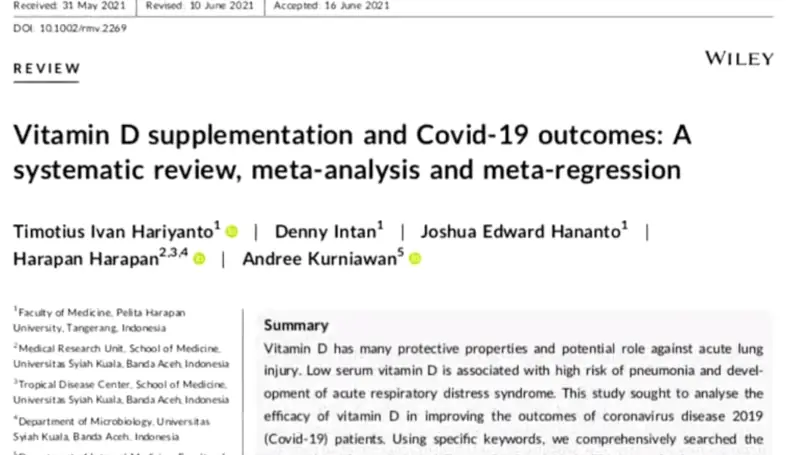
Lower levels of vitamin D have been shown to be associated with higher disease severity and higher mortality rates among COVID-19 patients [407]. A systematic review and meta-analysis published in March 2021 concluded that those deficient in vitamin D were 80% more likely to develop a COVID-19 infection compared with those who were not deficient [409]. Almost half of children treated for COVID-19 infections were found to be vitamin D deficient [410]. Additional meta-analyses also showed a strong link between vitamin D supplementation and reduced chance of admission to intensive care along with reduced need for ventilation when treatment was required [411, 412]. The experts reviewing this evidence suggested that there were three significant causal explanations for the efficacy of vitamin D in assisting the body to resist COVID-19 infection. The first is by strengthening cellular immunity by inducing the production of antimicrobial peptides. The second is by stimulating genes related to the control of the integrity of cellular junctions helping to reduce inter-cellular invasion by microorganisms and reducing associated inflammation. Finally, most immune cells have a vitamin D receptor and presence of sufficient vitamin D can assist in modulating the immune response and preventing harmful hyper-immune reactions such as the cytokine storm which is associated with much of the serious complications of COVID-19. Obesity is associated with lower levels of vitamin D circulating in the body [413]. This is suspected to be due to it becoming locked up in excess fat tissue in the body which blocks its bioavailability [414]. It is known that COVID-19 patients who are obese suffer from worse symptoms and have significantly more negative outcomes, including death, than patients who are not obese [415].
c. Zinc
Globally, around 6% of mortality is attributable to inadequate intake of micronutrients - in 2019 that would have been just less than 2.5 million deaths; annually, around 1 billion are at risk from zinc deficiency due to inadequate dietary supply [416, 417]. Use of zinc sulphate in COVID-19 patients has been found to decrease both the severity and lethality of the disease [418]. When zinc has been used in combination with low doses of hydroxychloroquine and azithromycin (commonly used against pneumonia) it has been shown to reduce hospitalisation [419]. Lower blood levels of zinc were found to be associated with worse severity of disease and more negative outcomes for COVID-19 inpatients; lower levels of zinc also appeared to be associated with higher inflammatory response and consequent complications [420]. Research from 2010 had already shown that zinc helps to block corona virus from replicating in cells [421].
d. Ivermectin
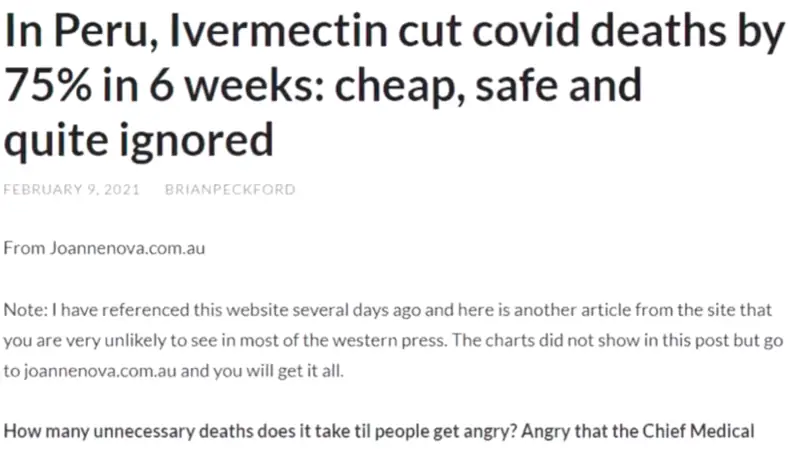
A meta-analysis of 18 randomised controlled trials performed by a team led by Dr Pierre Kory show that Ivermectin is a highly effective drug in reducing mortality, decreasing the length of recovery time from COVID-19 infection, and, when deployed as a preventative medicine, in significantly reducing the risk of contracting infection [422]. Kory and his team found that when deployed across large populations as a prophylactic, the effects on reducing incidence of disease have been dramatically positive. Ivermectin has been used in human medicine since the 1980s and is classed as an essential medicine by the WHO as it can be used against parasites and viruses and is extremely safe. Its efficacy against COVID-19 is suspected to be related to its anti-inflammatory properties and capacity for reducing complications associated with the cytokine storm. When used as a prophylactic it has been reported to reduce viral transmission five-fold. It has potential to be more effective and less risk-laden than COVID-19 vaccines and comes with decades of long-term safety data (as opposed to none for the novel vaccines). However, as of August 2021, key medical agencies such as the WHO, the US CDC, and European Medicines Agency, continued to suggest evidence for use of Ivermectin is uncertain and, despite being gung-ho for experimental mRNA vaccines, that use entirely novel methods and ingredients and have no long-term safety or efficacy data, they had not approved Ivermectin even for emergency use.
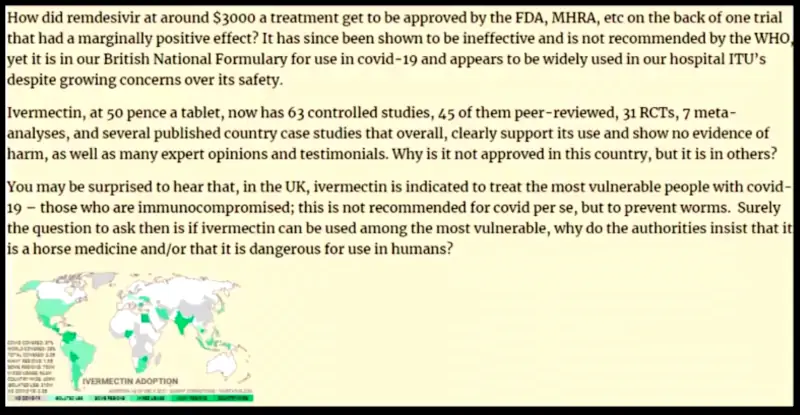
Ivermectin is produced as a generic drug by multiple manufacturers, it is not a huge profit maker. The refusal of agencies to base their decisions on full consideration of the evidence is, at the very least, a little suspicious. Especially so, given that, along with a host of colleagues, Dr Tess Laurie has provided ample evidence of the efficacy of ivermectin via a systematic review, meta-analysis, and trial sequential analysis, that included 24 randomised controlled trials; this evidence showed that infection rates could be reduced by up to 86% [423]. Use of ivermectin has been found to reduce mortality from COVID-19 infection by around 56% [424]. Dr Laurie is a consultant who has made a living working with teams of experts to thoroughly review medicines for approval for organisations including the NHS. Her work is of the highest standard in forensically examining evidence for the use of medicines. Not only has her evidence been ignored but, like many other highly qualified and highly intelligent people who have failed to acquiesce to expected narratives, she had been actively attacked and censored. One detailed and damning review by expert scientific journalist Edmund Fordham considers the failure to deploy Ivermectin a scandal and suggests that [425]:
At some point, officials who obstruct access to safe medicines are going to have to explain the moral difference between their actions and corporate manslaughter.
In the USA, a consortium of doctors and health professionals who had worked on the front line of health care during 2020, formed an organisation called Front Line COVID-19 Critical Care Alliance (FLCCC). Ivermectin was one of the drugs they recommended. They produced protocols called I-MASS, MATH+, I-MASK+ and I-RECOVER to help inform other health professionals on methods for preventing COVID-19 infection, for home and hospital treatment, and for use in recovery from long-term debilitating effects of the illness [426]. These protocols involved the use of cheap, commonly available vitamins and drugs that had been in use for a long time and had plenty of evidence of long-term safety from use in other applications for which they had FDA approval. The protocols were made available freely along with supporting evidence. They were ignored by the establishment.
Pete Jorgensen is a singer songwriter, guitar player, bass player, sound engineer, philosopher, author, artist, and horticultural scientist who has lived in Liverpool, Lancaster, Lancashire, Cornwall, Camden, and Surrey, England, UK.